
 Unlock Year-Round Fitness with Monsoon Rituals! Dramatically Cut Your Medical Bills and Enhance Your Life! By Dr. Mojin Mathew Feeling sluggish, stressed, or forgetful? Ever wondered if your body is harbouring hidden toxins? The monsoon season could be your answer to rejuvenation and detoxification! Why Monsoon MattersThe monsoon season, known in Ayurveda as Varsha Rtu and in Kerala as Karkkataka Masam, refreshes your body like nature’s own reset button. Just as pre-soaking helps clean dirty clothes, the monsoon moisture softens and flushes out accumulated toxins from your body, leaving you revitalised.  Do You Have Toxins? If you're living a modern lifestyle, you likely have toxins. Common symptoms include:
The Toxin-Disease ConnectionThink of toxins as seedlings and diseases as trees. Early removal of these "seedlings" prevents the growth of disease "trees," which are harder to tackle later on. Monsoon Detox: What to DoMaintain your regular health habits:
 Additionally, incorporate a special herbal porridge into your breakfast. For deeper detoxification, consider a Panchakarma cleanse. What is Panchakarma?Panchakarma is a powerful detox therapy that removes stubborn toxins. It includes massages, steam therapies, and herbal treatments to cleanse your body thoroughly. Sample Panchakarma Programme (14 Days)
Why Varsha Rtu? The monsoon's moisture and humidity make it the ideal season for detoxification, softening tissues and facilitating toxin expulsion. Who Can Benefit? Panchakarma is suitable for most people, but it’s best to consult an Ayurveda practitioner. Pregnant women and children can also benefit, with tailored treatments for safety. Nutrition During DetoxConsume easily digestible, balanced meals like herbal porridge (Navara rice porridge). Avoid heavy, oily, and spicy foods. Frequency of PanchakarmaAn annual cleanse during Varsha Rtu is recommended for optimal health. Benefits of Karkidaka Treatments
 Dr Mojin Mathew, Vaidyagrama Are There Any Side Effects?Mild symptoms like fatigue or headaches can occur, but these are temporary and typically mild.
Consultation DetailsBring your medication list, recent medical reports, and a detailed description of your symptoms to your consultation. Regular medications can usually be continued during Panchakarma, but always follow your practitioner's advice. Additional SupportWe offer home remedy guidance and personalised yoga and gym programs. Call us to know more about our Monsoon Programme at vaidyagrama.com. Experience the transformative power of monsoon detox and take a step towards a healthier, happier you!
0 Comments
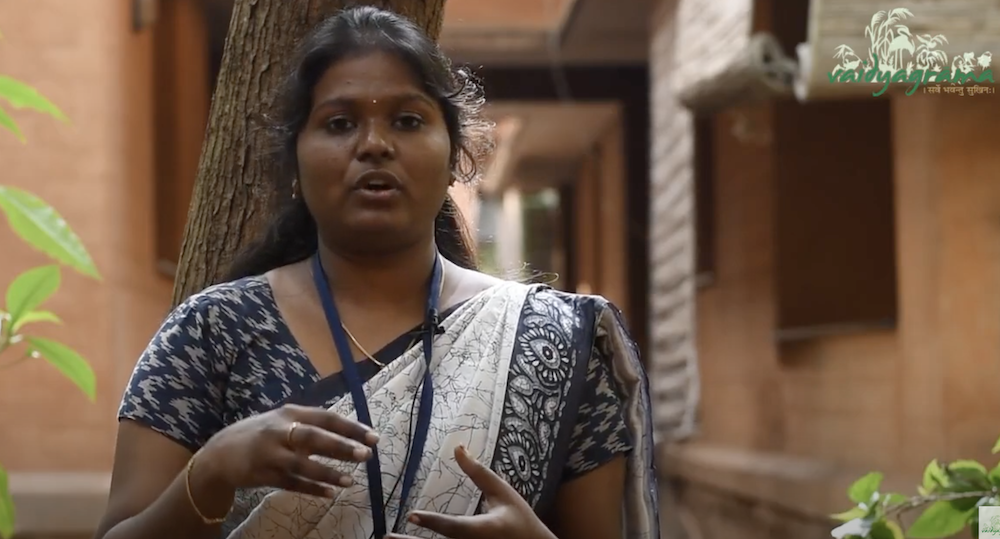 Namaste! I'm Dr. Vishaga, a medical officer at Vaidyagrama Healing Village, and today I'm here to unveil the mysteries of anemia, a condition that affects many lives. Let's dive into the depths of what anemia is and how Ayurveda can help address it effectively.
Anemia, simply put, occurs when blood becomes consistently empty, there's a decrease in the number of red blood cells (RBCs) or there's a drop in hemoglobin (HB) levels in your body. Hemoglobin plays a crucial role in transporting oxygen from your lungs to every corner of your being. When these levels dip, individuals can fall into the grip of anemia, experiencing symptoms like constant fatigue, dizziness, weakness, and shortness of breath. But why does anemia happen? Often, it's due to our dietary choices, such as consuming excessive salty or incompatible foods, or leading unhealthy lifestyles like daytime napping and indulging in junk foods. Ayurveda terms this condition as "Panduoga," often stemming from imbalances in our body's "Doshas." So, how do we combat anemia through Ayurveda? At VRMA Ora Healing Village, we believe in a holistic approach. Panchakarma therapies like Snehana or complete detoxification rejuvenate and nourish your body's tissues ("Dadus"), enhancing their functionality. We also prescribe specific herbal medications like "Abhrak Bhasma" and "Lauha Bhasma" to tackle anemia head-on. But the journey to overcoming anemia doesn't end there. Simple changes in your daily life can work wonders. Incorporating more iron and folic acid-rich foods, coupled with citric acids to aid iron absorption, can make a significant difference. Imagine savoring spinach with a splash of lemon juice, a perfect harmony for boosting iron levels naturally. Regular exercise, staying hydrated, and embracing a balanced diet play pivotal roles in reclaiming wellness from anemia's grasp. It's about nourishing your body, mind, and spirit in unison. So, if you're battling anemia, know that there's a holistic approach waiting for you at VRMA Ora Healing Village. Together, let's unlock the secrets to vibrant health and well-being, one step at a time. 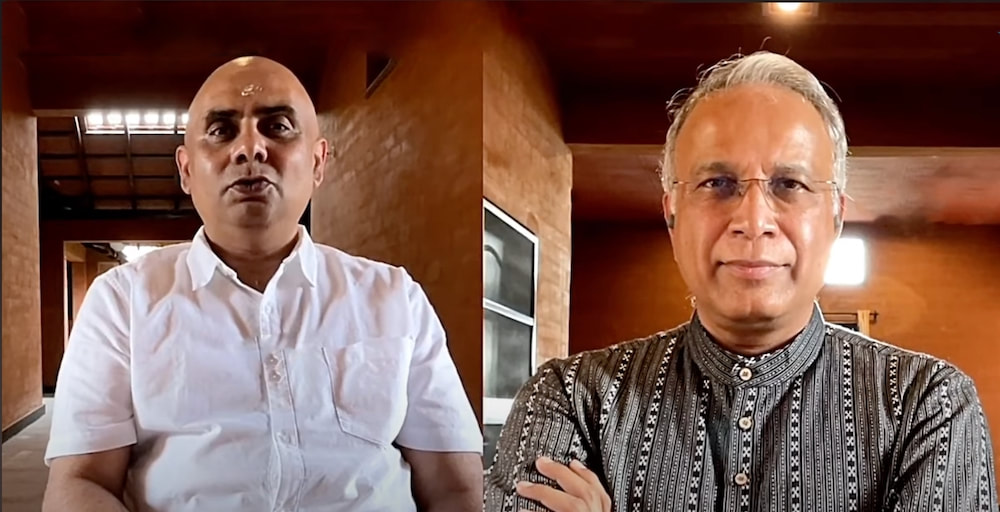 Namaskaram! I'm your host, Sri Ayat, and today we embark on a transformative journey into the world of Ayurveda at Vaidyagrama. Joining me is Dr. Ramkumar, one of the founders of this haven of healing. We'll explore why Vaidyagrama's approach to Ayurveda is not just about treatments but a holistic lifestyle.
The Genesis of Vaidyagrama: A Vision of Authentic Healing Sri Ayat: Namaskaram, Dr. Ramkumar, and welcome to Vigorous Channels! Dr. Ramkumar: It's a pleasure to be here, Sri Ayat. Sri Ayat: Dr. Ramkumar, last time we met, you shared insights into Vaidyagrama's inception and its unique approach to Ayurveda. Could you take us back to how it all began? Dr. Ramkumar: Certainly, Sri Ayat. Our journey started over three decades ago when a group of friends studied Ayurveda together in a simple, integrated environment. This experience planted seeds of simplicity and holistic living, which became the foundation of Vaidyagrama. Architecture and Healing: Creating Spaces for Well-Being Sri Ayat: Transitioning to Vaidyagrama's architecture, could you elaborate on how it supports the healing process? Dr. Ramkumar: Absolutely. Our architecture integrates a vaidya's home with patient units, fostering close doctor-patient relationships crucial for healing. We prioritize natural cooling and ventilation, creating a conducive environment for rest and healing without relying on artificial means. Rest and Activities: Nurturing Holistic Well-Being Sri Ayat: Rest is often overlooked in our busy lives. How does Vaidyagrama encourage restful states without distractions? Dr. Ramkumar: At Vaidyagrama, we offer a range of activities like yoga sessions and lectures that promote rest and relaxation without the need for television or air conditioning. Guests can immerse themselves in holistic well-being practices that rejuvenate both body and mind. Sustainability and Self-Sufficiency: The Eco-Conscious Vaidyagrama Sri Ayat: Let's delve into Vaidyagrama's commitment to sustainability. How does the retreat embody eco-consciousness? Dr. Ramkumar: Vaidyagrama's sustainability practices are integral to its ethos. From sourcing fresh produce for meals to innovative waste management solutions, every aspect is designed to minimize environmental impact while fostering a self-sustaining ecosystem. The Vaidyagrama Experience: A Harmony of Nature and Wellness Sri Ayat: In essence, why should one choose Vaidyagrama for an Ayurveda experience? Dr. Ramkumar: Vaidyagrama offers more than just healing; it offers a lifestyle that honors nature's wisdom. Whether seeking a brief respite or a transformative journey, Vaidyagrama invites guests to reconnect with wellness in harmony with the earth. Conclusion In conclusion, Vaidyagrama represents a holistic approach to Ayurveda, where architecture, rest, sustainability, and wellness converge to create a transformative healing experience. It's not just a retreat; it's a sanctuary where nature's healing powers are embraced for overall well-being.  The melodies of West Sharadashram, Where faith meets reverence, Echoes of souls and devotion, Blend of humanity and sacredness, A place where beliefs converge, Creating a tapestry of wellness and wealth, Where life breathes in harmony, And nature whispers ancient wisdom.
In this realm of Vaidyagrama, Where videos and lives intertwine, Unveiling the secrets of robotic health and wealth, Amidst the vibrant tapestry of India, Emerges a beacon of value and green endeavors, Inviting answers from the universe, On the path of Ayurveda's universal bonding, Where you are you, In every essence of being. As the rhythm of creation plays, Welcoming all to the realm of Vaidya care, Embracing the soul of well-being, And the essence of holistic healing, With rooms of echo and every page subscribed, Let's dive into the depths of Vaidyagrama's wisdom, In every beat, in every pulse, Lies the heartbeat of wellness and spirituality. Join the voyage, Where health and patient intertwine, In a dance of rejuvenation and discovery, With whispers of ancient embraces, And the art of healing in every breath, Let's walk the path of transformation, In the realm of Vaidyagrama's legacy, Where every leaf tells a story, And every soul finds solace. Let's embark together, On this journey of self-discovery, Where the heartbeats of Vaidyagrama, Echo in the rhythm of universal wellness, And the symphony of nature's bounty, Plays the melody of healing and harmony. Welcome to Vaidyagrama, Where miracles unfold, In the embrace of ancient wisdom, And the promise of a healthier tomorrow. Title: Discovering Healing Harmony at Vaidyagrama Ayurveda Village: A Patient's Perspective1/4/2024 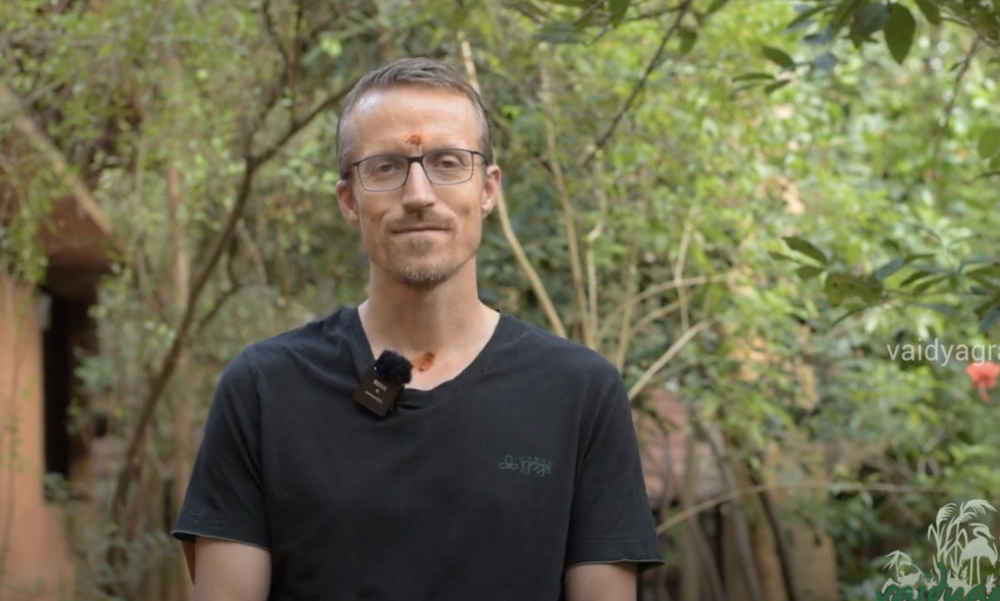 In the serene embrace of Vaidyagrama Ayurveda Village, Henrik Ving from Denmark discovered a profound sense of trust and healing that transcends mere treatment. His journey through this haven of holistic wellness paints a vivid picture of Vaidyagrama's deep-rooted integrity and transformative power.
Trusting Tradition, Embracing Healing Henrik's journey began with a leap of faith, entrusting his well-being to Vaidyagrama's renowned doctors and dedicated staff. From the moment he arrived, the aura of authenticity and tradition enveloped him, instilling a deep sense of trust in every aspect of his healing journey. A Sanctuary of Relaxation and Renewal What sets Vaidyagrama apart is not just its medical expertise but also its immersive environment designed for relaxation and rejuvenation. Surrounded by nature's beauty and thoughtfully crafted architecture, Henrik found himself effortlessly slipping into a state of tranquility, where the hustle of being a patient melted away, replaced by a sense of peaceful recreation. Authenticity in Every Detail One of the hallmarks of Vaidyagrama is its unwavering commitment to authenticity, evident in every meal served and every ingredient chosen. The meticulously prepared food, infused with healing properties, became an integral part of Henrik's daily routine, nourishing not just his body but also his soul. A Vision for Growth and Excellence Henrik's experience at Vaidyagrama left him eager to return, not just for his own healing journey but also to witness the ongoing growth and evolution of this exceptional healing sanctuary. He envisions a future where Vaidyagrama continues to surpass expectations, becoming an even more profound source of well-being and transformation. Embrace the Vaidyagrama Journey If you're seeking a place where tradition meets innovation, trust meets authenticity, and healing meets harmony, Vaidyagrama Ayurveda Village beckons. Step into a world where every moment is infused with the promise of holistic wellness and discover the transformative power of ancient wisdom in a modern setting. Conclusion Henrik's testament to Vaidyagrama's healing prowess is not just a story but an invitation to experience a journey of profound healing and rejuvenation. Whether you seek relief from ailments or a deeper connection to holistic well-being, Vaidyagrama stands as a beacon of hope and healing in a fast-paced world. Embrace the Vaidyagrama journey and unlock the secrets of timeless wellness. 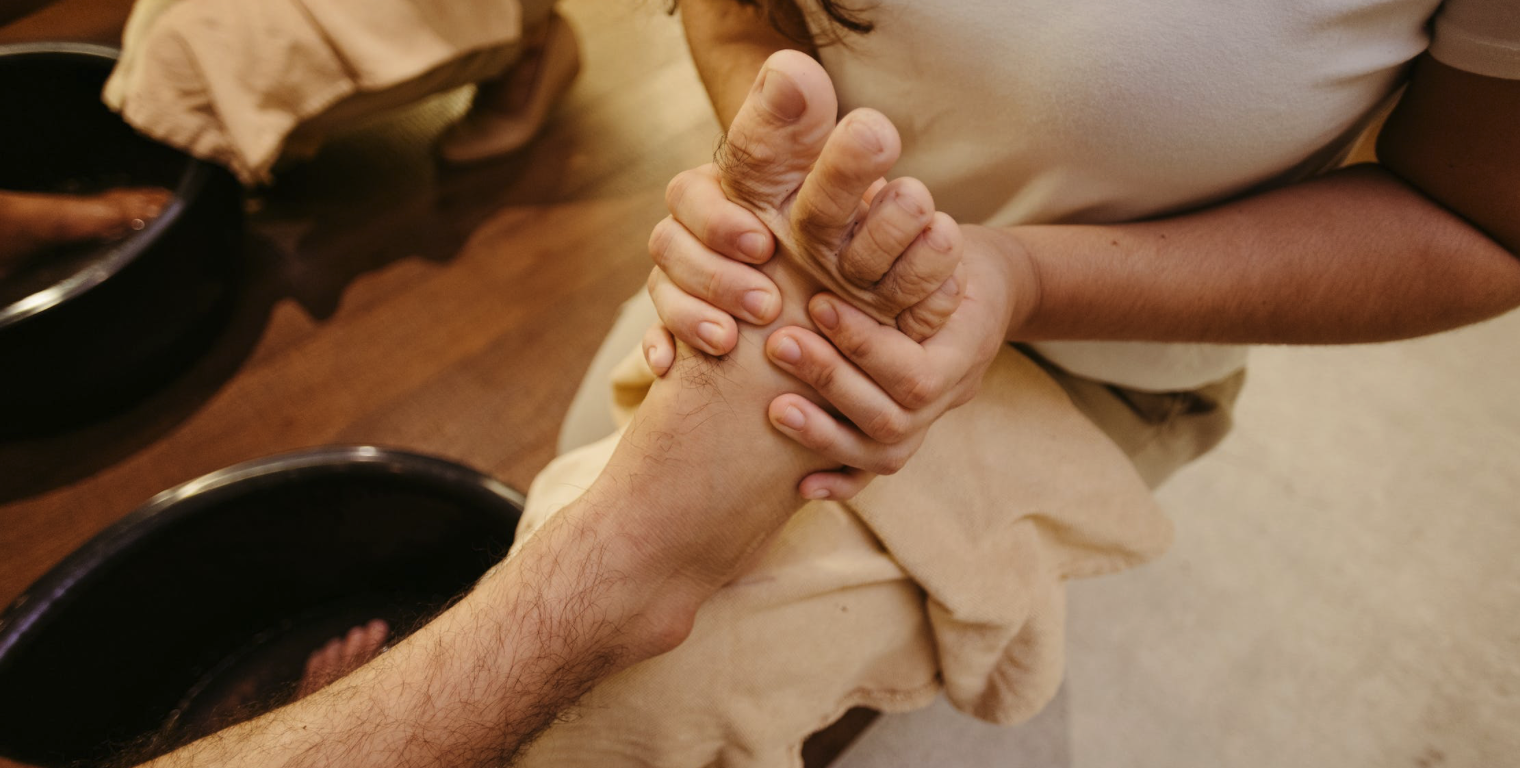 Introduction: In the realm of Ayurveda, the feet are regarded as a sacred gateway to balance and well-being. Rooted in ancient wisdom, the practice of self-foot massage, or "Padabhyanga," has been a cherished ritual for promoting vitality and harmony within the body. In this blog, we explore the art of self-foot massage, incorporating Ayurvedic wisdom, the significance of marma points, and supporting research reports that validate the therapeutic benefits of this ancient practice.
Ayurvedic Wisdom: Ayurveda, the science of life, recognizes the intricate connection between various parts of the body and their influence on overall health. The feet, in particular, are considered a repository of vital energy points and pathways. When engaged through the practice of Padabhyanga, these energy points, known as marma points, are stimulated, promoting balance and healing.
The Art of Self-Foot Massage:
Benefits Supported by Research:
Conclusion: As we rediscover the therapeutic art of self-foot massage through the lens of Ayurveda, we unlock a gateway to holistic well-being. By honoring the ancient wisdom of marma points and choosing the right Ayurvedic oils, we embark on a journey of self-care that not only nurtures the feet but also rejuvenates the entire being. So, step into the world of Padabhyanga, and let your soles guide you towards a state of serenity and balance.  Introduction: In the fast-paced world we live in, self-care has become more crucial than ever. Among the myriad of self-care practices, Ayurveda, the ancient Indian system of medicine, offers a unique and holistic approach to wellness. One of the key rituals in Ayurveda is self-massage, or "Abhyanga," using Ayurvedic oils. In this blog, we will delve into the wisdom of Ayurveda, exploring the art of self-massage and the numerous benefits associated with it, supported by both ancient knowledge and modern research reports.
Ayurvedic Wisdom: Ayurveda, often referred to as the "science of life," views health as a balance between mind, body, and spirit. Abhyanga, a daily self-massage ritual, is considered a cornerstone of Ayurvedic self-care. The choice of oils is crucial, as each Ayurvedic oil is believed to possess unique qualities that cater to different doshas (energetic forces) within the body.
The Art of Self-Massage:
Benefits Supported by Research:
Conclusion: Embarking on the journey of self-massage with Ayurvedic oils is not merely a physical act but a holistic approach to well-being. As we reconnect with the ancient wisdom of Ayurveda, we find that the benefits extend beyond the physical body, reaching the realms of mental and spiritual harmony. So, indulge in the art of Abhyanga, and let the healing touch of Ayurvedic oils guide you towards a state of balance and vitality. In the grand symphony of life, the seasons take centre stage as nature's healing angels, each with its own unique melody to play. These seasonal shifts are not mere transitions in weather, but empowering forces that influence our physical and mental well-being. Imagine them as maestros, skilful playing on the health keys, generating intricate happy tunes on the piano of our health. From the crisp embrace of winter to the vibrant bloom of spring, every season holds a vital role in building our inner vitality and resilience. Do you want to explore how you can get energy and health from each season? Join me. Let’s begin!  Unlocking the Secrets of Ritucharya Ritucharya is all about syncing your lifestyle with the natural rhythm of the seasons. It's a powerful practice that helps your body seamlessly adapt to the changing environment without throwing off its internal balance. This ancient wisdom encompasses crucial rules and practices related to diet, lifestyle, conduct, and thoughts, all pivotal for a healthy life. Ayurveda's Guiding Principle: Ayurveda's foundational principle, "Swasthyashya Swasthya Rakshanam," underscores the importance of preserving health rather than just treating ailments. It's all about cultivating wellness in our daily routines and adapting to seasonal shifts. Neglecting this holistic approach can lead to imbalances and health issues. An Ancient Wisdom Goes Global: As seasons evolve, our surroundings undergo noticeable shifts. Recognizing and adhering to Ritucharya becomes crucial. Neglecting seasonal practices can disrupt our body's equilibrium, potentially leading to various health issues. Traditional Chinese Medicine and various ancient cultures also emphasise aligning with seasonal shifts. This cross-cultural insight underscores the universal importance of harmonising with nature. The Six Seasons Unveiled: Ayurveda divides the year into two six-month segments based on the Sun's movement, each containing three seasons. This classification offers a nuanced understanding of how nature influences our well-being. Uttarayana: Picture the sun's northward journey, akin to the Earth's orbit around it. This spans from mid-January to mid-July, transitioning from winter to spring and then to summer. The increasing warmth and dryness affect all living beings. Dakshinayana: This signifies the sun's descent, mirroring the Earth's orbit. It covers the period from mid-July to mid-January, shifting from monsoon to autumn and finally to late autumn. Cooler conditions prevail, impacting the environment and its inhabitants. Fluctuations in Strength: Strength varies with the seasons. Weakest at the start of Dakshinayana and the end of Uttarayana (monsoon and summer), moderate during Sharata and Vasanta (autumn and spring), and highest during Hemanta and Shishira (late autumn and winter). Ritucharya and Tridosha Theory: Ritucharya is deeply rooted in Ayurveda's Tridosha theory, which defines our constitutions by Vata, Pitta, and Kapha. These doshas undergo changes with the seasons, and Ritucharya guides us in adapting our lifestyle, diet, and practices to maintain harmony and prevent imbalances. By embracing Ritucharya, we align ourselves with the natural flow of life, nurturing a state of balance, health, and vitality throughout the changing seasons. It's a timeless practice that holds the key to a thriving, well-rounded life.
Dr. Ramkumar of Vaidyagrama on how Ayurveda can help post-COVID patients for a healthy lifestyle! Namaskar! Welcome, everyone. I’m Dr. Ram Kumar, and it’s a pleasure to have you all here at Vaidya Grama. Today, I’d like to share with you the journey of Vaidya Grama, especially in light of the COVID-19 pandemic, and discuss how we can fortify our well-being through Ayurvedic principles.
As we sit here, surrounded by the tranquility of the temple and the lush bamboo trees, I can't help but feel grateful for how far we’ve come. You might notice the new buildings around; these are part of our expansion efforts. Despite the pandemic setting us back, we’ve made significant progress. During the two-year slowdown, we focused on improving our agricultural practices. We increased our vegetable production from 100-150 kilos a day to around 700 kilos. Additionally, we ventured into paddy cultivation, and if all goes well, we’ll have our first harvest next month. This journey towards self-sustainability has been vital for us. COVID-19 brought many challenges, but it also reinforced the importance of holistic health practices. Patients are now returning from all over India and even internationally, seeking Ayurvedic treatments for post-COVID complications. Ayurveda emphasizes diet, lifestyle, herbs, pranayama, asana, meditation, and stress management. These elements are crucial, especially now. One of the biggest challenges during the pandemic was fear and panic. Ayurveda teaches us that a calm mind is essential for good health. When the mind is peaceful, we can find effective solutions to our problems. This is something we emphasize a lot here. At Vaidya Grama, we strive for sustainability and self-sufficiency. We grow our own produce and use traditional fertilizers like gobar, gomutra, and jeevamrtam. This not only supports our community but also benefits nearby villages, especially in semi-arid regions where land resources are limited. Many people have reported long-term weakness after recovering from COVID-19. Ayurveda offers holistic solutions to fortify the body against future health issues. There are predictions of another pandemic in 2024, so building resilience is crucial. Ayurveda teaches us that all health problems start in the stomach. A strong digestive system and efficient metabolism are key to maintaining good health. Problems often arise from eating heavy, hard-to-digest foods at the wrong times and in the wrong quantities. By eating a balanced diet and following regular eating schedules, we can enhance our Agni, or digestive fire, which in turn boosts our resilience. There’s a connection between a predominantly vegetarian diet and better resistance to illnesses like COVID-19. A strong Agni helps our body fight off external threats more effectively. As we look to the future, it’s important to be mindful of our diet and lifestyle. Transitioning food habits can be challenging, but it’s all about self-awareness. Listen to your body. Notice how different foods make you feel. Post-COVID, many people have become more conscious of their diet, sleep, and overall lifestyle, adopting healthier habits. I’m proud to share that Vaidya Grama has been recognized as one of the top five Ayurveda healthcare centers in India. This recognition is a testament to the comprehensive care we provide. If you have chronic issues, like persistent knee pain or muscular problems, Ayurveda offers holistic solutions that are worth exploring. In conclusion, our work at Vaidya Grama is about more than just treating illnesses. It’s about promoting a holistic approach to health and well-being. Our emphasis on sustainability, self-sufficiency, and traditional Ayurvedic practices provides a comprehensive solution to modern health challenges. Thank you for being here and for your interest in Ayurveda. Together, we can work towards better health and well-being. Namaskar! 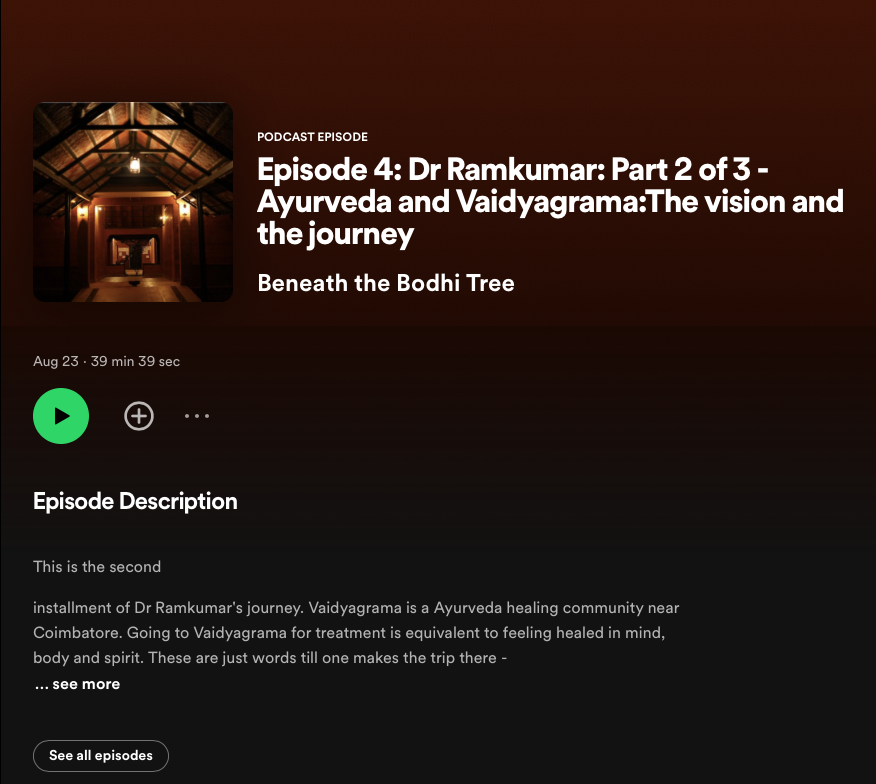 This is the second instalment of Dr Ramkumar's journey. Vaidyagrama is a Ayurveda healing community near Coimbatore.
Going to Vaidyagrama for treatment is equivalent to feeling healed in mind, body and spirit. These are just words till one makes the trip there - and then, they acquire real meaning. This is about the journey of Vaidyagrama through the eyes and words of one of the co-founders, Dr Ramkumar - his unique journey from childhood to where he is now - listen to him speak as he tells us how he took the road less travelled - of Ayurveda wisdom - studying and applying Ayurveda, seeking inspiration in remote villages and in the peace and quiet of the Himalayas and speaking about Ayurveda within India and abroad. These experiences, rather organically, led to the vision of Vaidyagrama - a community built on idealistic principles but backed by dogged determination, and shared by five of his close friends ( 3 Vaidyas and 2 organisational development experts ), who joined hands to build this amazing community. Do join Dr Ramkumar and me in this podcast as he shares this remarkable journey, that inspires us to know what it takes to build a beautiful and sustainable community of any kind. It is also a journey that inspires us to dream and to have the courage to turn that dream into reality. Email us at [email protected] with questions or comments. |

|


|
|

|
|